.jpg)
.jpg)
Myopia, commonly known as short-sightedness, causes difficulty seeing distant objects clearly without vision aids such as spectacles or myopia control lenses. It is caused by the gradual elongation of the eyeball.
Myopia can hinder your child's learning from an early age. Progressing myopia can also lead to thinning of the retina, increasing the risk of serious eye diseases like retinal detachments, glaucoma and myopic maculopathy.
If your child has any of the above symptoms, or if you suspect worsening vision, please bring your child to consult our optometrist or optician for a further assessment. Young children are advisable to have annual eye examinations.
When both parents are myopic, there is 6× more risk of a child having high myopia. Genetic factors combine with environment.
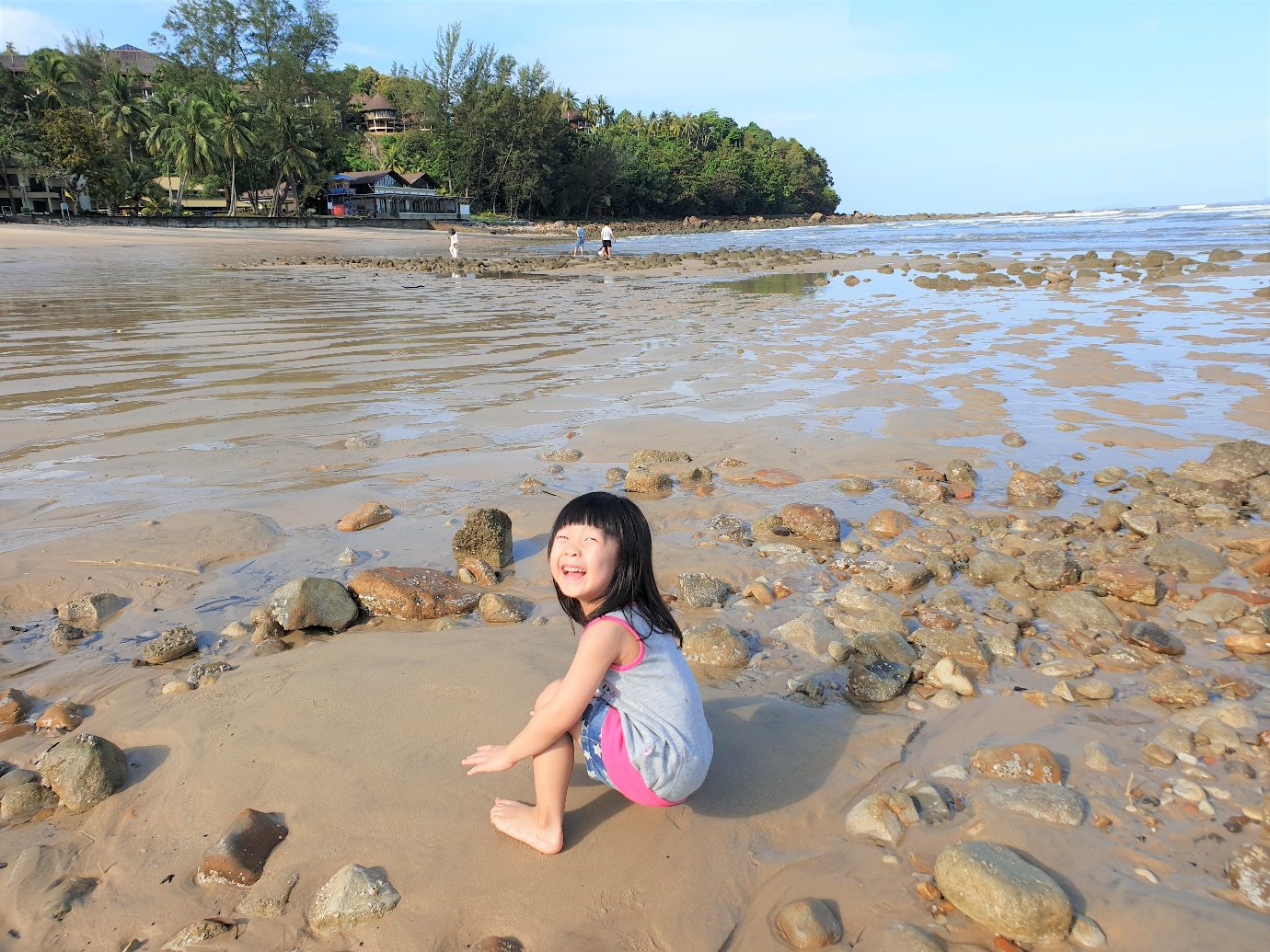
Extended near-screen time and lack of outdoor activities (less than 2–3 hours/day) significantly increase myopia risk for children.
There is no cure for myopia, but early intervention is proven to slow progression and prevent high myopia at a later stage of life.
Our optometrists will assess your child and recommend the most suitable approach — or a combination of methods for best results.
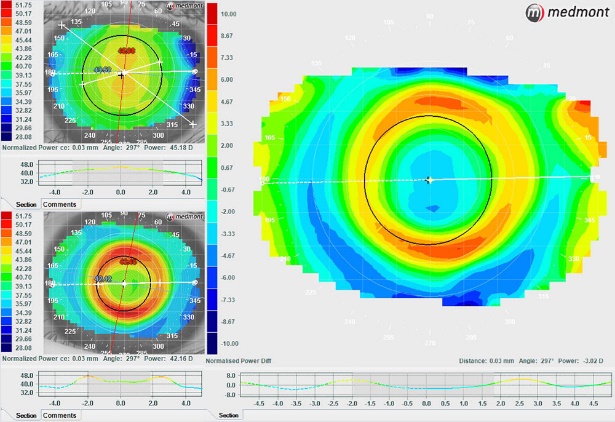
Orthokeratology (OrthoK / OK lenses / Cornea Reshaping Therapy) uses customised, high oxygen-permeable lenses worn overnight to gently reshape the cornea, providing clear vision during the day — no daytime glasses needed.
OrthoK creates a positive defocus zone around the pupil which reduces signals for eyeball elongation, clinically proven to slow myopia progression. Ideal for active children who tend to damage or lose glasses.
A daily disposable silicone hydrogel lens designed specifically for the pediatric eye. Clinical studies show a reduction in axial elongation of 0.105mm on average in as little as 6 months.
Paediatric-inspired in design, providing the comfort of ACUVUE OASYS 1-Day lenses with easy handling for children. Our kid-friendly optometrists will assess suitability and guide your child through lens handling.

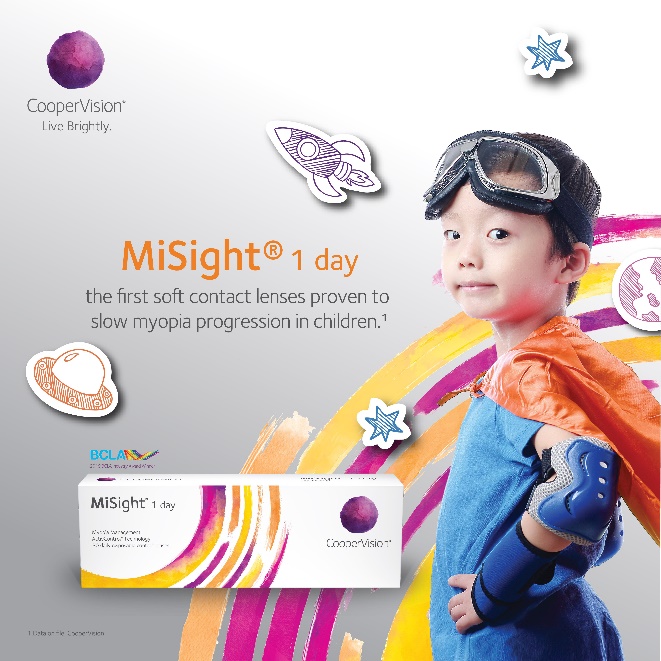
FDA-approved MiSight contact lenses correct near-sightedness and slow myopia progression in children (aged 8–12 at initiation) by 59%. Suitable for more mature children who can handle soft lenses properly. Daily disposables ensure a clean lens every day.
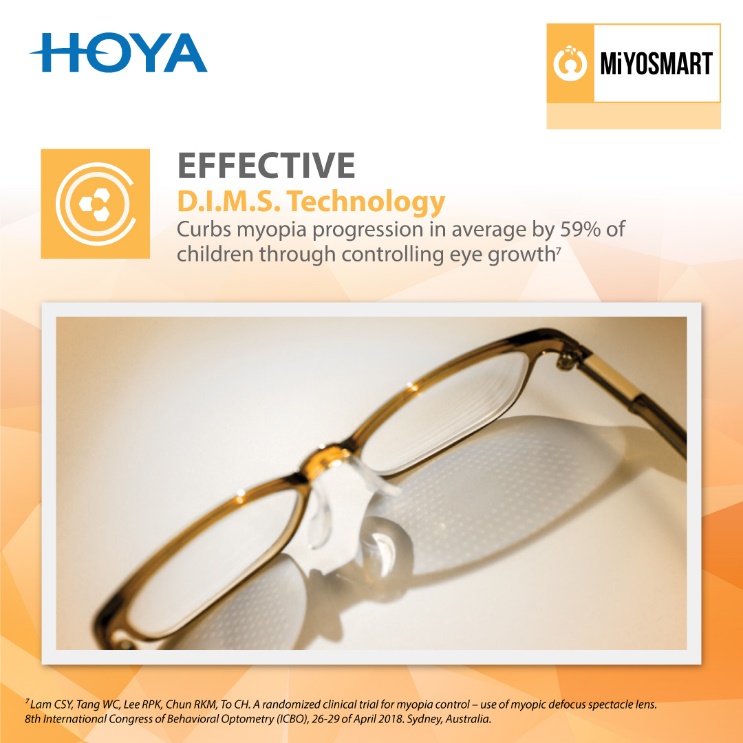
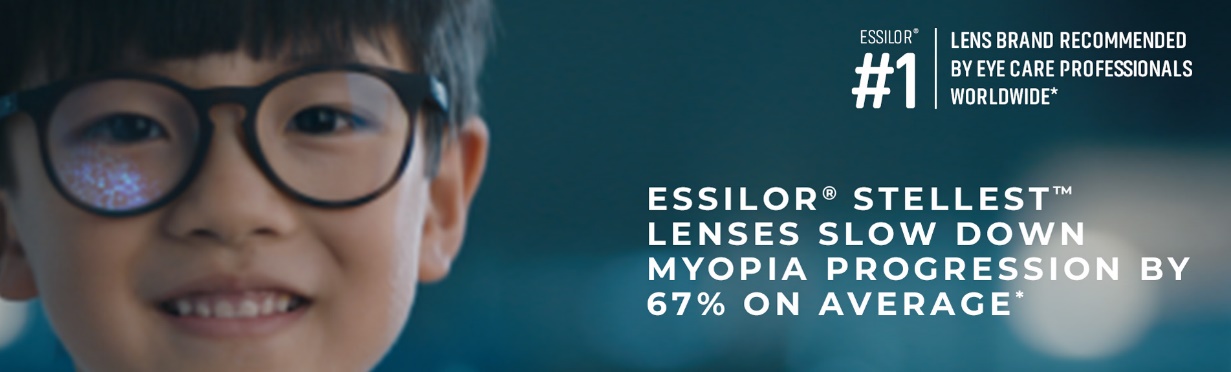
The latest high-efficacy myopia control spectacle lenses offer clinically proven progression reduction:
A good first-choice for a child newly diagnosed with myopia, especially for parents who prefer glasses over contact lenses.
Applied once daily, atropine drops have shown to control myopia progression in many patients. They are not a cure, but can enhance results when combined with OrthoK or myopia control eyeglasses. Atropine must be prescribed by an eye doctor.
Parents play a vital role in myopia management. Here's how you can help at home: